
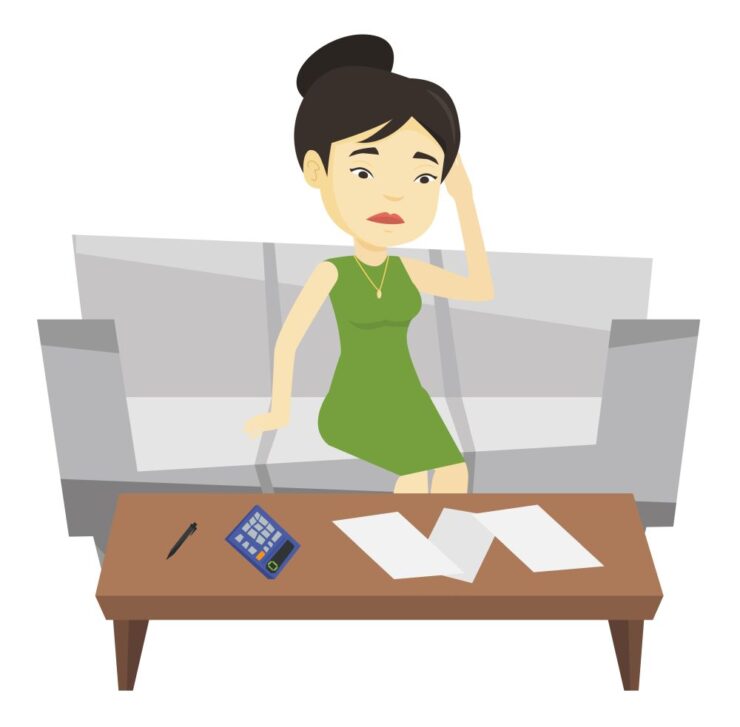
Let’s be real for a second—there’s a specific kind of shame that hits differently when it comes to money.
The “I should’ve known better” spiral. The “why did I do that again” self-attack. The “everyone else seems to have it figured out but me” comparison trap that leaves you feeling like you’re the only one who’s struggling.
Maybe you’ve avoided opening bank emails for weeks. Maybe you’ve ignored the credit card app notifications so long that you stopped seeing them. Maybe you’ve smiled and said everything is “fine” when someone asks about money, when the truth is it’s actually really not fine right now.
Here’s the thing: not because you’re irresponsible or lazy or any of the other terrible things your inner critic tells you. But because you’re overwhelmed. Because nobody taught you this stuff. Because the stakes feel so high and the shame feels so heavy that avoidance seems easier than facing it.
Can we talk about something that the traditional personal finance world completely ignores? Money shame has nothing to do with intelligence, discipline, or maturity. It’s emotional. It’s learned from childhood messages and cultural pressure, and a society that ties your worth to your net worth. And most importantly, it’s completely fixable.
You are not behind. You are not broken. And you’re definitely not the only millennial woman who feels this way.
Today we’re breaking the cycle—gently, honestly, and from a place of empowerment instead of punishment. Because the truth is, you can’t budget your way out of shame. You can’t save your way out of it either. You have to heal it first.
Let’s do this together.
What Money Shame Actually Is (And Why It Keeps You Stuck)
Money shame isn’t about the numbers in your account. It’s about the stories you tell yourself about those numbers.
It shows up as avoiding checking your balance because you’re scared of what you’ll see. Feeling embarrassed about past decisions, even though you were doing the best you could with what you knew at the time. Believing deep down that you’re just “bad with money” and always will be. Comparing yourself to friends who seem to have it all together on Instagram (spoiler: they probably don’t). Letting fear keep you frozen instead of taking even small steps forward.
But here’s what nobody tells you about where this comes from: Money shame is learned. Maybe you grew up in a house where money was stressful, and nobody talked about it openly. Maybe you absorbed cultural messages that you needed to be perfect, or you failed. Maybe you experienced actual financial trauma—job loss, unexpected debt, watching your parents struggle. Maybe you’re the first person in your family trying to figure out wealth-building,0 and there’s literally no roadmap.
Oh, and let’s not forget that our education system completely failed us. Most of us graduated without a single class on budgeting, investing, credit scores, or literally any practical money skill we’d actually need as adults.
Money shame keeps you stuck because it whispers: “You messed up, so don’t even try. You’re not good at this. Just give up.” But the real truth that shame doesn’t want you to know? You “messed up” because nobody taught you. You’re struggling because the system set you up to struggle. And that ends today.
Why Breaking Shame Changes Everything
Here’s something that took me years to understand: you cannot budget, save, or pay off debt sustainably until you break the emotional freeze that shame creates. You just can’t.
On the behavioral side, breaking shame changes how you actually interact with money. More confidence leads to more action instead of paralysis. Less avoidance means more clarity about what’s really happening. You make better decisions because you’re not emotionally triggered every time you think about money. You build consistent habits instead of that guilt-driven chaos where you’re perfect for two weeks and then completely fall off for two months.
But the emotional benefits? That’s where the real transformation happens. You feel lighter, like actually physically lighter in your body. That constant low-level anxiety about money starts to drop. You stop getting that stomach-dropping feeling every time you check your bank account. You build financial self-trust, which might be the most important money skill there is. And you finally, finally stop punishing yourself and start supporting yourself instead.
Breaking money shame isn’t just a nice-to-have emotional exercise. It’s literally the foundation of every single financial win you will ever have. You can have the perfect budget, but if you’re operating from shame, you won’t stick to it. You can know exactly what you should do with money, but if shame is in the driver’s seat, you’ll self-sabotage.
Compassion first, then action. Not the other way around.
✨ Millie by Example
Let me tell you something a friend told me once. I won’t sugar-coat it because I think it’s important for you to know you’re not alone in this: she used to be genuinely terrified of her bank balance.
Years ago, she’d swipe her card at the grocery store and literally pray it wouldn’t decline. She’d avoid logging into her accounts for days, sometimes weeks, because she “already knew” it would be bad, so why torture herself by looking? She’d beat herself up for every single decision. Ordered takeout because she was exhausted after work? Shame spiral. Went on a weekend trip with friends? Guilt for days. Bought something when she was stressed? Mental self-flagellation.
The absolute low point came when she got hit with a $35 overdraft fee trying to pay a bill she’d completely forgotten about. And she’d forgotten about it because she was avoiding her accounts. So the shame literally cost her money, which created more shame, which made her avoid even more. It was a perfect, terrible cycle.
And here’s what she finally realized: this wasn’t happening because she was irresponsible or stupid or any of the things she was calling herself. It was happening because she was ashamed. The shame was creating the avoidance. The avoidance was creating the problems. The problems were creating more shame.
The turning point came when she decided to try something radically different: curiosity over judgment. Instead of asking herself “What’s wrong with me?” every time she looked at her money, she started asking “What’s actually going on here? What do I need to understand?”
That shift from criticism to compassion changed everything. Within three months, she was checking her accounts daily without anxiety. Within six months, she had a system that actually worked. Not because she suddenly became a different person, but because she stopped fighting against shame and started working with herself instead.
Sometimes the most powerful financial tool isn’t a budget or an app. It’s just treating yourself like someone worthy of kindness.
What Science Says About Shame and Money
This isn’t just emotional fluffy stuff—there’s actual research backing this up.
Behavioral economics studies show that people who approach money with self-compassion are significantly more likely to stick to long-term financial habits than people who try to shame themselves into change. Shame literally shuts down your prefrontal cortex. That’s the part of your brain responsible for decision-making and planning. When you’re in shame, you’re operating from your stress response, not your rational brain.
Research published in Psychology Today confirms what many of us have learned: avoidance creates a devastating loop. Shame leads to avoidance. Avoidance leads to worse results. Worse results create more shame. Round and round until you feel completely stuck.
The Financial Therapy Association has found that women who openly acknowledge money emotions without judgment increase their savings rates and maintain financial routines significantly longer than those who try to just “power through” or pretend the emotions don’t exist.
The bottom line that all of this research points to? Shame is not motivating. It never has been. Compassion is what creates lasting change.
How to Actually Break the Cycle (Your Step-by-Step Reset)
Okay, so how do you actually do this? How do you break a shame cycle that might have been years in the making?
Start by naming the feeling out loud. Literally say, “I feel ashamed about my money right now.” It sounds simple, but naming the emotion separates you from it. You’re not the shame. You’re the person experiencing the shame. That distinction matters.
Replace judgment with curiosity. This is the shift that changed everything for me. Instead of “What’s wrong with me?” start asking “What’s really happening with my money? What patterns do I notice? What do I need to learn?” Curiosity opens doors. Judgment slams them shut.
Do a 5-minute money check-in. Not a full budget session. Not a deep dive into every transaction from the past six months. Just peek at your accounts. See what’s there. You’re proving to your brain: “See? I looked, and I survived. It’s just information, not a judgment of my worth.”
Start with one easy win. Just one. Maybe you automate $10 to savings. Maybe you can cancel one subscription you’re not using. Maybe you set up autopay for one bill so you stop worrying about forgetting it. Small wins rebuild self-trust brick by brick.
Use what I call the “best friend rule.” Talk to yourself the way you’d talk to your best friend if she came to you with money stress. You would never tell her she’s stupid or behind or a failure. You’d be kind. You’d be supportive. You’d remind her that she’s doing her best. Do that for yourself.
Tell someone you trust. Money shame thrives in secrecy and isolation. It dies in community and honest conversation. You don’t have to broadcast your entire financial situation on social media, but telling even one trusted person breaks the shame’s power.
Build a system, not perfection. Shame lives in chaos and inconsistency. Confidence lives in routine, even if that routine is small and simple. You don’t need a perfect system. You need a doable system that you can actually maintain.
✨ Millie’s Money Moment
Not in the mood to read the full post? Here’s the quick hit:
Your past money mistakes do not define you. Your next choice does.
- Name the feeling without judgment
- Practice curiosity, not criticism
- Do a 5-minute account check-in
- Start with ONE tiny win
- Treat yourself like your best friend would
💡 Money clarity starts with self-compassion, not shame.
👉 Ready to try? Pick one thing from this list. Just one. Do it this week. Notice how it feels to approach your money with kindness instead of criticism.
Quick FAQ
What if I’ve made really bad money decisions?
Join the club—we all have. Past decisions were made with the information, resources, and emotional capacity you had at that time. You can’t change them. But you can decide right now how you want to move forward. That’s where your power lives.
How do I stop comparing myself to others?
Remember that social media is everyone’s highlight reel, not their reality. That friend who seems to have it all together? She’s probably dealing with her own money stress behind the scenes. Focus on your own progress, not someone else’s curated image.
What if my shame comes from my family or childhood?
That’s really common and really valid. You can’t change how you were raised or what messages you absorbed as a kid. But you can decide as an adult to rewrite those stories. Consider talking to a financial therapist if the shame feels too heavy to tackle alone.
How long does it take to break money shame?
There’s no timeline. For some people, it’s weeks, for others it’s months or longer. What matters is that you keep showing up with compassion instead of criticism. Progress, not perfection.
Final Word
Here’s what I need you to know: your money shame isn’t your identity. It’s not a permanent part of who you are. It’s a learned response that you can unlearn. It’s a chapter in your story, not the whole book.
Every single woman I know who has transformed her financial life, including me, started in the same place you might be right now. Overwhelmed. Ashamed. Avoiding. Convinced she was the only one struggling while everyone else had it figured out.
The difference between staying stuck and moving forward isn’t having more money, more discipline, or more knowledge. It’s deciding to approach yourself with compassion instead of criticism. It’s choosing curiosity over judgment. It’s taking one small step even when you’re scared, and then taking another one after that.
You don’t need to have it all figured out tomorrow. You don’t need to become a completely different person. You just need to start treating yourself like someone who deserves financial peace—because you absolutely do.
Your relationship with money can change. Your shame can heal. Your financial situation can improve. But it all starts with extending yourself the same kindness you’d give to anyone you love who was struggling.
You’re not behind. You’re exactly where you need to be to start moving forward.
And you don’t have to do this alone.
Here’s the Receipts
On shame, avoidance, and financial outcomes:
- Psychology Today (2024): “What Financial Stress Does to Relationships” – Research confirms the shame-avoidance-worse outcomes cycle, particularly pronounced among millennial women due to higher financial anxiety. https://www.psychologytoday.com/us/blog/financial-matters/202405/what-financial-stress-does-to-relationships
On gender differences in money shame and anxiety:
- Principal Foundation (2025): Survey findings show millennial women are 44% more likely than men to feel anxious about money discussions and 45% more likely to avoid them due to fear of judgment, often tied to societal expectations and comparison. https://www.plansponsor.com/principal-foundation-young-women-more-anxious-less-confident-discussing-money-than-men/
Stay aware. That’s the real first shift.
— Millie
More Tips


Add comment